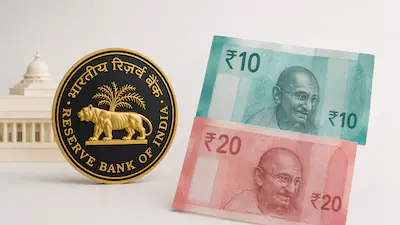
Plastic notes of 10 and 20 rupees will soon hit the market. The central government has approved a proposal by the Reserve Bank of India (RBI) to conduct field trials. If the trials are successful, they are planned to be issued regularly. The government has said that this is only for trial purposes and will not affect the existing paper notes. In a written reply to the Lok Sabha, Minister of State for Finance Pankaj Chaudhary confirmed the approval of the RBI’s proposal.
The government has clarified that there is no proposal under consideration to discontinue paper notes. The polymer notes will be circulated along with the existing notes. If the field trials are successful, a decision will be taken on their large-scale issuance in future.
As part of the field trials, the RBI will print a large number of polymer notes of 10 and 20 rupees. These notes will be circulated in different regions. The aim of the trials is to evaluate their performance under Indian climatic conditions and usage, transaction patterns. The Reserve Bank believes that polymer notes will last longer than standard paper notes. The 10 and 20 rupee notes deteriorate rapidly, requiring frequent printing and destruction. The use of polymer notes can help reduce these costs.
According to the RBI, it is easy to incorporate modern security features in polymer notes. Clear windows, special security threads and other advanced elements can be incorporated. As a result, counterfeiting of the notes will become much more difficult than before. The RBI believes that cash transactions and digital payments are complementary to each other and will coexist in the future.