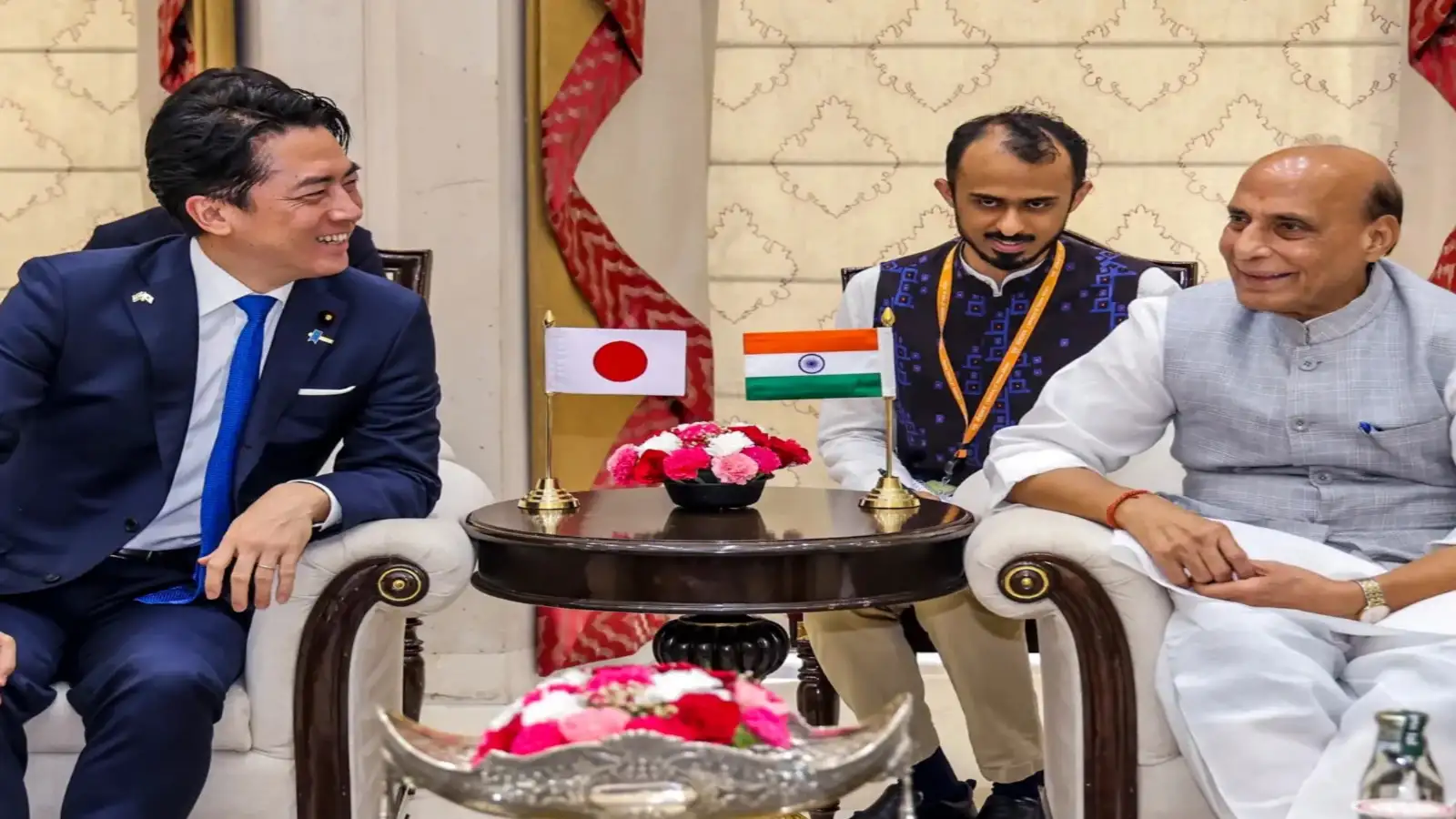
India and Japan have adopted a major strategy to counter China’s growing assertiveness in the Indo-Pacific region. These two powerful maritime nations have united to forge a defense agreement that has left China deeply unsettled. While it may appear to be a routine cooperative arrangement on paper, behind the scenes, it represents a significant diplomatic strategy capable of crippling the Chinese Navy. On August 20, 2026, a ‘Memorandum of Arrangement on Maritime Security Cooperation’ was signed in New Delhi between Indian Defence Minister Rajnath Singh and Japanese Defence Minister Shinjiro Koizumi. Much like the old Japanese magic trick ‘Tejuma’, although this agreement is ostensibly framed as a disaster management pact, its true objective lies in anti-submarine warfare and the exchange of intelligence.
Five targets with a single arrow:
- Curbing Chinese espionage: Through this agreement, India and Japan have effectively become each other’s eyes and ears. This enables round-the-clock tracking of Chinese submarines silently prowling the ocean depths.
- Submarine information exchange: While detecting enemy submarines in the deep ocean is challenging, this agreement allows both nations to share precise information regarding submarine locations.
- India’s growing maritime influence: India possesses state-of-the-art diving and rescue vessels like ‘INS Nistar’, capable of rescuing submarines from depths of 300 meters. In conjunction with Japanese ships like ‘Chihaya’ and ‘Chiyoda’, this has created a robust rescue network.
- Easy access to Japan: The Japanese Navy has been granted access to pre-approved, safe routes within Indian maritime boundaries.
- Targeting China’s vulnerabilities: Merely building large ships does not equate to true strength. The Chinese Navy has several strategic vulnerabilities that can be easily countered through such joint operations. Through this strategic move, India and Japan have completely transformed the power game in Asia, which has become a major cause for concern for Beijing.