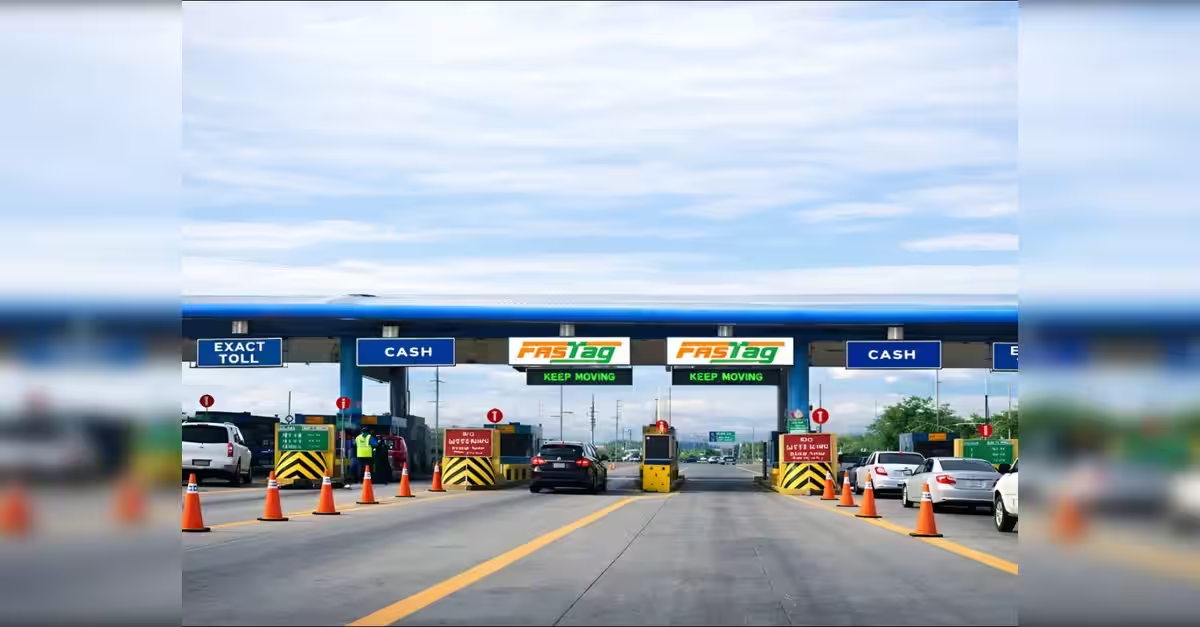
Toll collection on national highways has witnessed a significant rise following the implementation of the FASTag system in the country. Consequently, toll collections have increased by ₹7,000 crore (10%), reaching a total of ₹82,000 crore. Seamless travel at toll plazas across the nation is set to become a reality soon. Union Minister for Road Transport and Highways Nitin Gadkari has stated that FASTag is capable of realizing this vision.
Read more: Crude oil price rise: War tensions in the Middle East push crude oil prices to $108.
Addressing the Global Fintech Fest, Mr. Gadkari stated that the government aims to implement a completely seamless tolling system across the country by March 2027. Such a state-of-the-art tolling system will generate an additional annual revenue of ₹20,000–25,000 crore for the Central Government. To further streamline travel on national highways, a facility named ‘One Tag’ has been launched in Mumbai. Through this, motorists can easily link their existing FASTags to different bank accounts using a mobile app. To ensure a seamless tolling experience, Automatic Number Plate Recognition (ANPR) and multi-lane free-flow systems have been integrated with FASTag.
By December 2026, over 70% of the country’s toll plazas will be equipped to facilitate seamless, uninterrupted travel. By March 2027, all toll plazas will be converted into systems that allow vehicles to pass through without stopping. This initiative is expected to generate an additional annual revenue of ₹7,000 to ₹8,000 crore for the exchequer. The use of digital technology at toll plazas has reduced operational costs from approximately 12% to between 2% and 3%. While vehicles previously had to wait an average of 12 minutes at toll plazas, that waiting time has now been significantly reduced. The reduction in traffic congestion and waiting times is resulting in an annual fuel saving of ₹5,250 crore across the country. To date, over 13 crore FASTags have been issued nationwide, and their usage on national highways has crossed the 98% mark.