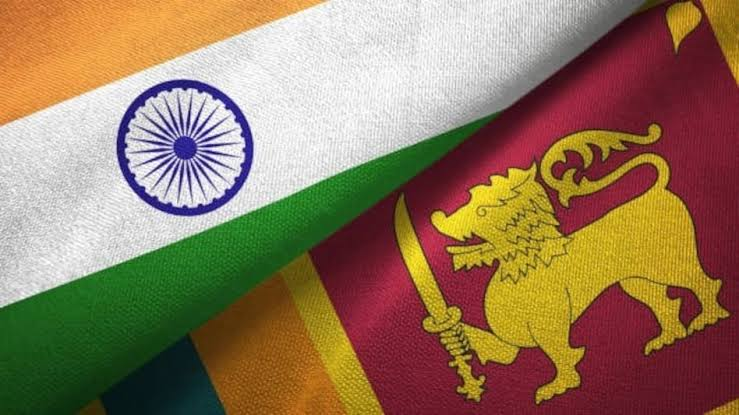
There was a time when the country was in a state of poverty. The riots had grown so much that people had even occupied the President’s Palace. But now this country has made a strong comeback. After many years of economic instability, it has again achieved the status of an ‘upper middle income economy’. We are talking about the neighboring country of Sri Lanka. It had declared itself bankrupt a few years ago. The country went bankrupt because it could not repay its foreign loans. Because tourism was affected due to Covid-19. Due to this, a slowdown was created in the economy there. The riots also skyrocketed. The whole world saw what the people did when they were dissatisfied. The disgruntled people occupied the President’s Palace. Now this country has returned to its old status. The World Bank has released a fresh report on the country’s economy. According to it, this is a big achievement for Sri Lanka after the serious financial crisis that came in 2022. Similarly, India is still in the ‘lower-middle income economy’.
Apart from Sri Lanka, this country has also become rich
Sri Lanka’s upgrade is part of a major change in the World Bank’s income categories. The changes took effect on July 1, 2026 and will be in effect until June 30, 2027. The annual update covers 218 economies. This year, six of these countries have been placed in the high-income category. Apart from Sri Lanka, Vietnam, the Philippines, Jordan and Micronesia have been moved from ‘lower-middle’ to ‘upper-middle’ income category. Meanwhile, Mayotte has moved from ‘upper-middle’ to ‘high-income’ category.
How did Sri Lanka’s fortunes suddenly change?
According to the World Bank, Sri Lanka’s move to the ‘upper middle income’ category is seen as a process of recovering from its economic crisis. The country was on the verge of sovereign debt default in 2022. The country is projected to achieve real GDP growth of 5 percent in 2025, while its per capita gross national income (GNI) has increased by 11.2 percent. The World Bank attributed this to improved economic activity, low inflation and exchange rate stability. As a result, Sri Lanka’s per capita income in the new category has risen above the threshold for an ‘upper middle income’ economy.
Why is India lagging behind Sri Lanka?
Despite being one of the fastest growing economies in the world, India is still classified as a ‘lower-middle income economy’. This is because the World Bank uses ‘GNI per capita’ instead of total GDP. Although India is one of the world’s largest economies in terms of total size, its income is distributed among over 1.4 billion people. As a result, the average per capita income is below the ‘upper middle class income’ threshold.